An Amazing Technology That's Transforming Plastic Bottles
The vitamin bottle you buy for your health outlasts you by centuries. Here's the technology quietly fixing that.
Researchers have found microplastics, shed by ordinary plastic bottles, inside human blood and breast milk. One of the biggest sources is the supplement bottle you bought to get healthier. Americans buy billions of them every year, all in the name of feeling better. The stuff inside is supposed to help you live longer. The container it comes in will outlive you, your children, their children, and keep going for roughly 450 years.
The part nobody put on the label
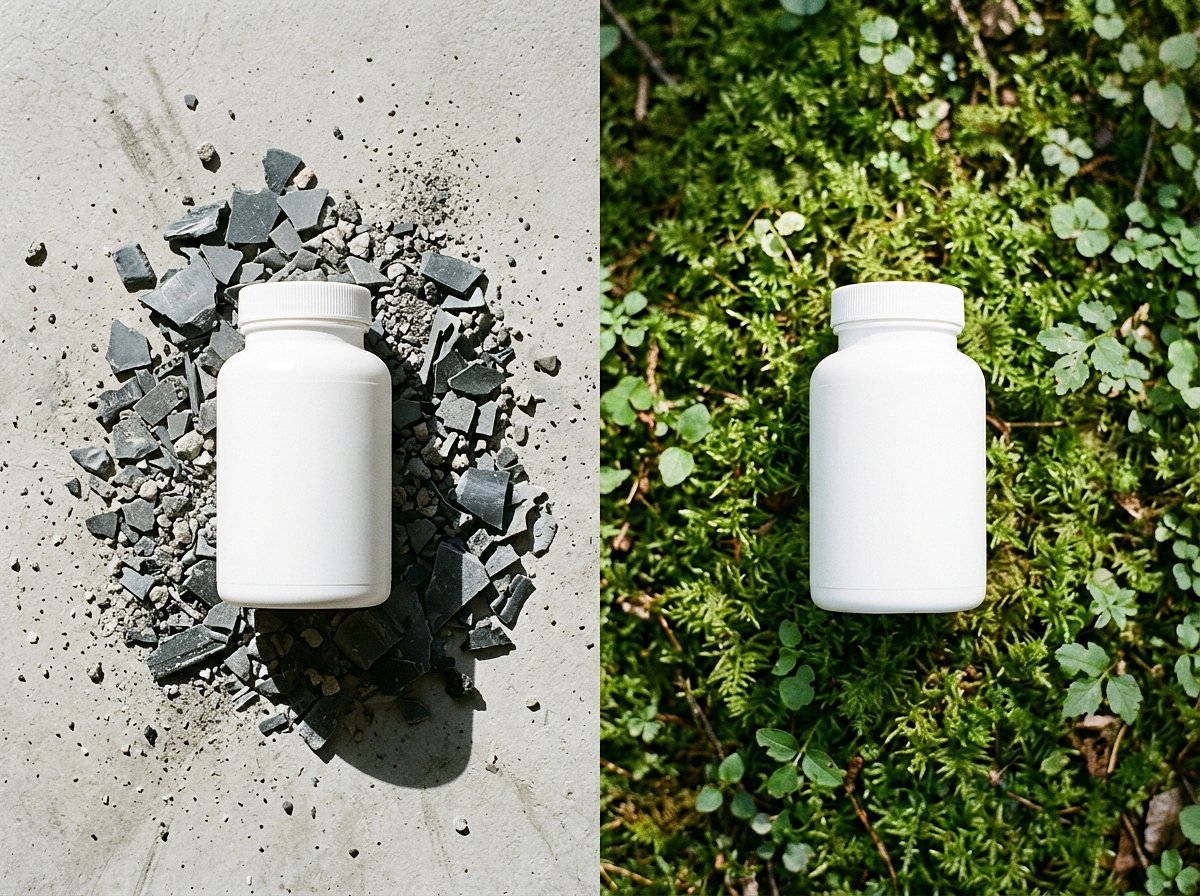
That plastic bottle doesn't actually go away. It never does. It just breaks into smaller and smaller pieces, forever. Those pieces, microplastics, are too small to see, and they've stopped staying in the ocean. They're in human blood now. In breast milk. Inside people.
So the honest version of the vitamin aisle reads like a bad joke. You buy the wellness product. It comes wrapped in a material that sheds particles now turning up inside human bodies. Nobody says that part out loud. It is not on the label. It is not in the marketing. A brand can spend millions telling you their capsules will optimize your health while shipping them to you in a container that contributes to the precise kind of systemic contamination their product claims to fight.
Why it's been like this forever
You'd think a health brand would care about this. Many do. So why the plastic?
Because plastic is cheap and familiar, and the economics are ruthlessly simple: a brand that switches materials absorbs that cost on the income statement this quarter. The ocean absorbs the alternative for the next four centuries. Guess which one wins the budget meeting. Filling lines already run conventional plastic. Switching costs money upfront. And here's the quiet part, it costs a brand exactly nothing once you throw the bottle away. Whatever happens to that plastic for the next 450 years is not on their books. It's on the ocean's. Nobody in the supply chain gets an invoice for it, so the default has always been the easiest sentence in business: keep using what we already use.
"Globally, only about 9% of all plastic ever made has been recycled. The rest was landfilled, burned, or just left out there. Every piece of it is a future source of microplastics."
Nine. Not ninety. All those bottles you carefully rinsed and sorted over the years mostly did not get recycled. They're still out there. Fragmenting. Quietly entering waterways, soil, and bodies. Nobody advertised that part of the product either.
Someone actually fixed this
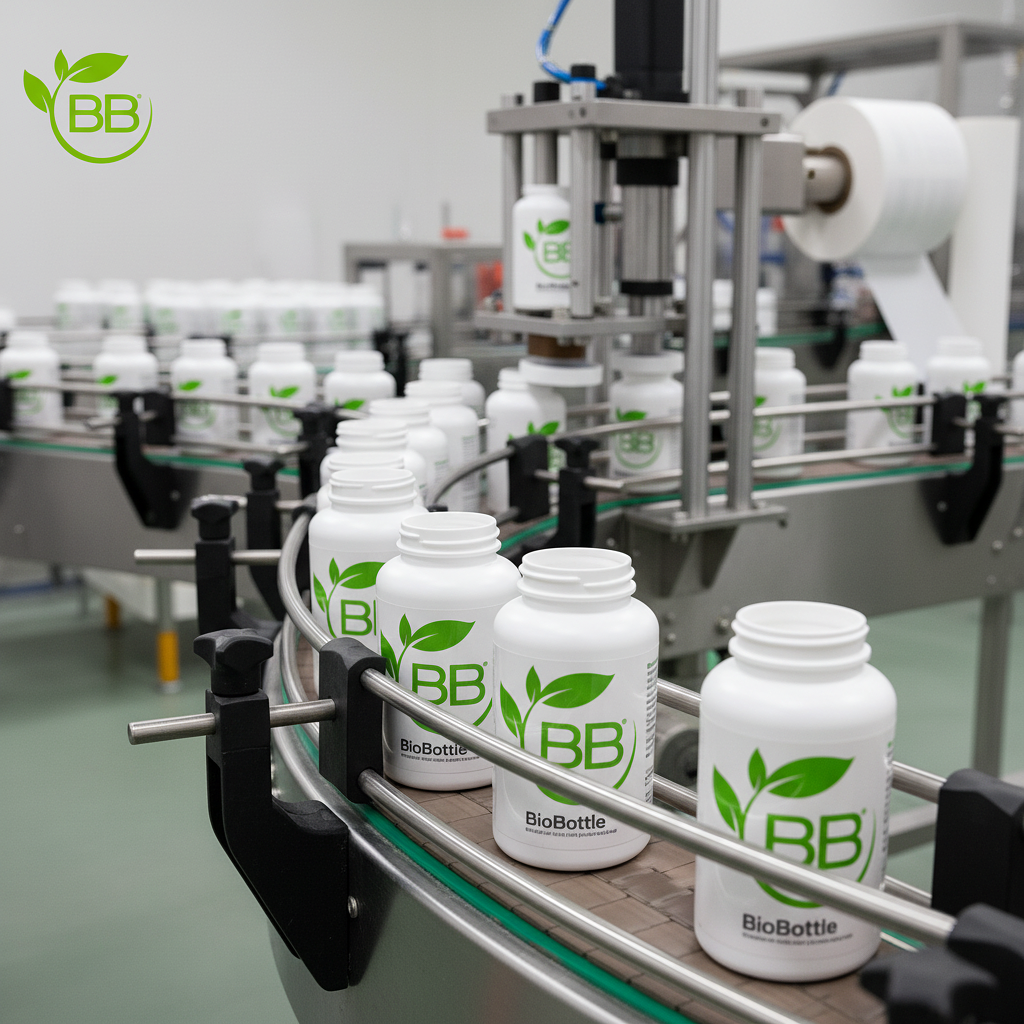
A handful of supplement brands have quietly switched to a different kind of bottle, and most of their customers have no idea. It looks the same. It feels the same. It holds your vitamins the same way, sits on a shelf for years without degrading, and you'd never notice the difference by looking at it. The difference is built into the material itself.
Conventional plastic persists for roughly 450 years; these bottles break down approximately 90 times faster, and they don't break down by fragmenting into microplastics. Instead, the material converts to a soft, waxy substance that ordinary soil bacteria can consume, converting it into harmless byproducts, water, carbon dioxide, and organic matter bacteria can use, instead of microplastic fragments.
That's the whole trick. One version haunts the planet for four and a half centuries. The other quietly disappears without leaving a microplastic trail. These are bottles engineered to break down safely instead of fragmenting, and the brand name for them is BioBottles® by GreenFrog Packaging.
They're fully recyclable, shelf-stable for years, and require no new machinery, brands run them on the same filling lines they already own. The barrier to switching is low. The barrier has always been low. Which makes the industry's decades-long inertia even harder to excuse.
What this means for you
Think about every vitamin bottle you've ever bought. Every protein tub, every fish oil, every gummy jar. Picture the pile. All of it is still out there, fragmenting slowly and quietly into pieces small enough to end up in blood. That pile will be fragmenting for your entire lifetime. It will still be fragmenting when people who aren't born yet are elderly.
The bottles switching over now won't do that. Same shelf, same product, completely different ending, for the ocean, for the soil, and for whatever ends up inside a human body downstream.
The one question worth asking
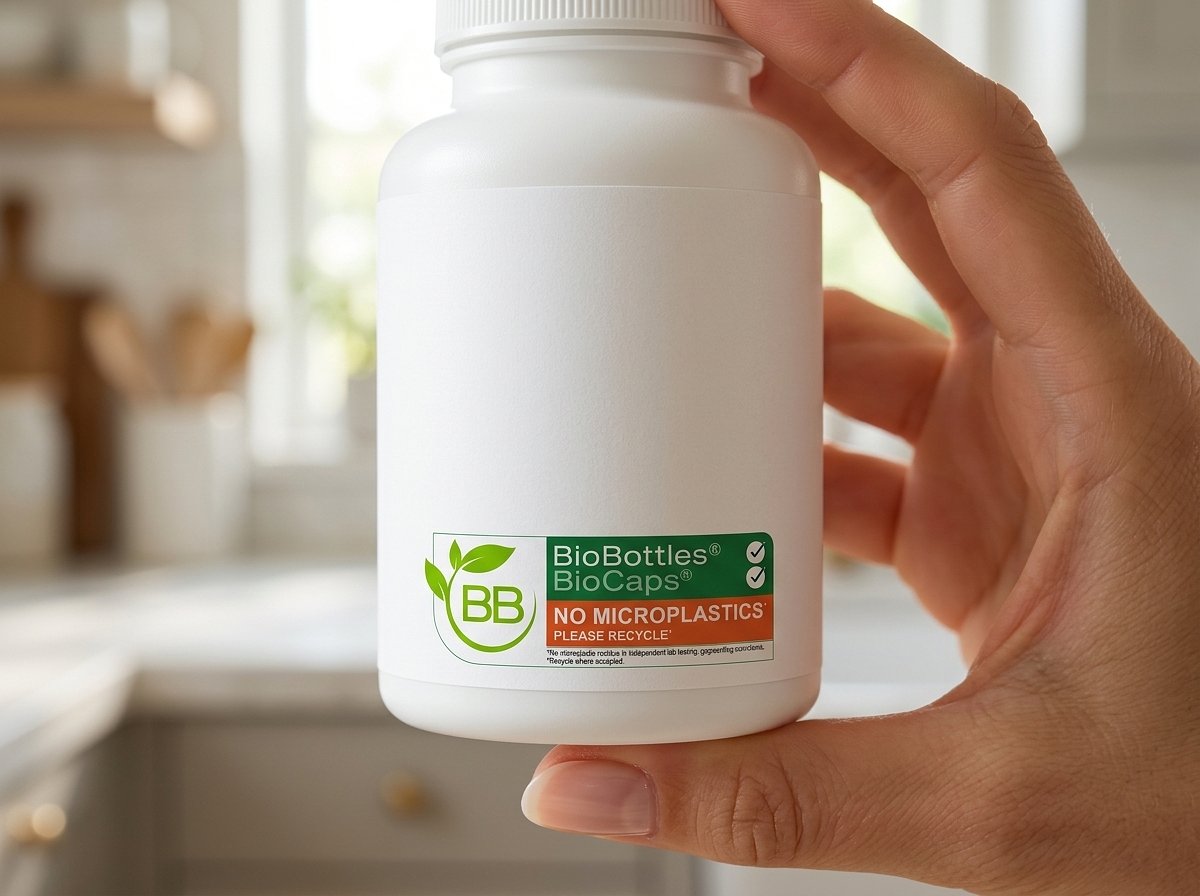
You already read supplement labels. You check the dose, the fillers, the sourcing. You're good at this. So add one more question. The next time you're standing in that aisle or scrolling past that brand: what bottle are they actually using?
Because "healthy" should describe the whole product, not just the powder inside, but the container it rides home in and everything that container does for the next four centuries after it leaves your hand.