Built to Fall Apart or Built to Be Remade? The Labs Tested Both — on the Same Plastic
The claim that plastic can break down or be recycled but never both is a myth. Two labs tested the same HDPE bottle both ways. Both passed.
There is a sentence you hear at trade shows, in sustainability meetings, and in nearly every packaging think-piece written in the last five years. It goes something like this: a plastic can be built to fall apart, or it can be built to be remade, but never both.
It sounds like physics. It sounds like the kind of hard truth that ends an argument.
It is wrong.
And the interesting part is not that it is wrong in theory. It is that the exact thing the claim says is impossible has already been done, in two separate laboratories, on the same physical material, tested two entirely different ways. One test asked whether the plastic breaks down and gets consumed by microbes. The other asked whether it survives the recycling stream without wrecking anything. Same resin. Same rigid HDPE bottle. Two standards pointing in opposite directions. Both satisfied.
That is a strange thing to read right after "you can only pick one." So let us walk through the beliefs that keep the "pick one" assumption alive, one at a time, and set each against what the data actually shows. Some of these beliefs are partly right. Saying so is the entire point, because the ones that are wrong are wrong in a specific, documentable way, and you cannot see it clearly until you have granted the ones that are right.
Misconception 1: "Biodegradable is the most misleading word in packaging"
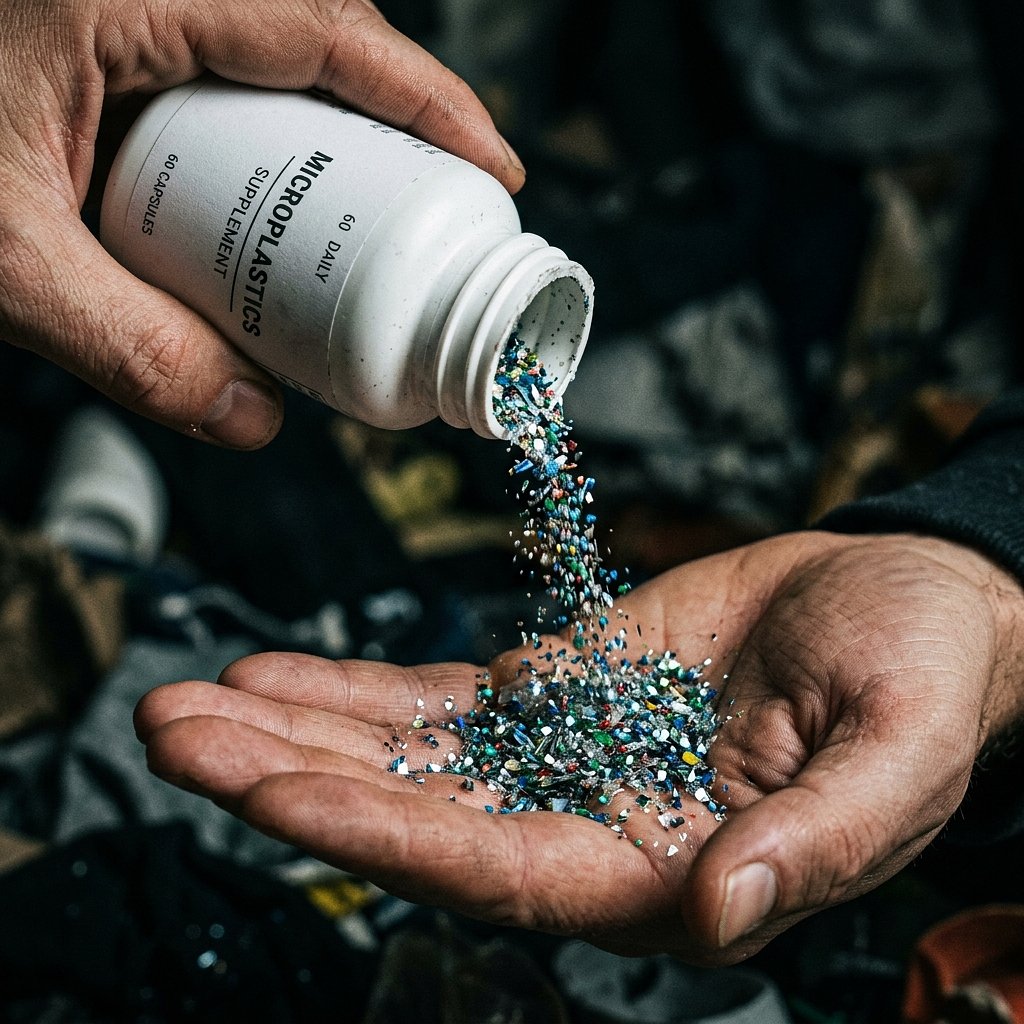
Partly true. And the part that is true matters enough that we act on it.
Here is the legitimate version of the complaint. In the U.S. market, the Federal Trade Commission's Green Guides (16 CFR §260.8) set a bar for any on-pack "degradable" claim: the product has to completely decompose within one year. That is a strict bar. It is strict enough that ordinary organic things you would casually call degradable fail it too. A wooden fence post does not fully decompose within a year. Neither does an apple core in most conditions. So the bar is not a measure of whether something is genuinely degradable in nature; it is a marketing threshold, and a demanding one.
A one-year ceiling that almost nothing shelf-stable can clear is not an accident of drafting. It is the kind of definition that quietly protects the recycling status quo, because the recycling industry and its trade lobby have every incentive to keep durable degradable plastics off the shelf and out of the conversation. Write the definition tight enough and nothing real can meet it, and then the failure to meet it gets pointed at as if it were proof of a defect. Follow the incentive and the shape of the rule stops looking accidental.
None of that changes the honest core of the complaint: a bare, unsubstantiated "biodegradable" slapped on a package with no data behind it is a real problem in the U.S. market, and California's labeling rules compound the risk. That criticism is fair.
But watch the move that usually follows it. The complaint about the word gets treated as a verdict on the chemistry. Those are two different things. A menu can be misleading while the kitchen is perfectly good.
This is exactly why, in the U.S. market, BioBottles® are described by what they actually do at the molecular level, controlled oxidation engineered to help prevent persistent microplastic formation if the packaging escapes containment, rather than by one loaded word that means different things in different markets and can be redefined at any time. Describe the mechanism, cite the test, qualify the recyclability. That is not evasion. That is what compliant substantiation looks like when you take the FTC's bar seriously instead of pretending it does not exist.
So: agree that a bare on-pack claim is a problem. Then refuse to let that agreement quietly convict a chemistry it never actually examined.
Misconception 2: "A pro-oxidant additive just breaks plastic into microplastics that persist for hundreds of years"
This is the strongest-sounding objection, so it deserves the most honest handling, and that starts with the part of it that is true.
Yes, there is a fragmentation stage. Oxidation cuts the long polymer chains, the material embrittles, and it breaks up. This is not something we hope you skip past. Researchers at the U.S. EPA's National Risk Management Research Laboratory, Sahle-Demessie and Mezgebe, found that pro-oxidant polypropylene will "embrittle, crack and break into pieces and powder within two weeks of weathering."
Read that on its own and it is the microplastics attack line, word for word.
One caveat you should know before anyone weaponizes it against you: that is research by EPA scientists, published by them, and their presentation carries an explicit disclaimer that the views are the authors' and do not represent EPA policy. It is not an EPA endorsement of anything, and anyone who tells you the EPA "approved" this technology has misread the document. It is genuinely independent research, which is precisely what makes it worth citing honestly.
So the fragmentation is real. The question the scary version of this claim never asks is the only one that matters:
Does it stop there?
Ordinary plastic stops there. Its fragments carry a molecular weight far too high for any microbe to consume, so they persist, getting smaller and smaller for decades. As the Lambton Manufacturing Innovation Centre report puts it, the important thing is not the size of the fragments but the molecular weight. A tiny fragment that is still a high-molecular-weight polymer is a microplastic. A tiny fragment that oxidation has carried down to a waxy, low-molecular-weight material that bacteria will eat is on its way out of the ecosystem entirely.
The line a standards body already drew
There are two different things hiding under one ugly prefix, and the European standards body CEN separated them formally in TR 15351.
- Oxo-degradation is degradation resulting from oxidative cleavage of macromolecules. This describes ordinary plastic, with no intentionally added catalyst. It fragments in sunlight and then it stops becoming anything a microbe can digest. It just gets smaller. This is the fragment-and-quit junk. Nobody with any sense sells it.
- Oxo-biodegradation is degradation resulting from oxidative and cell-mediated phenomena, either simultaneously or successively. Fragmentation is step one. Microbial digestion of what is left is step two.
The Lambton report, dated 25 September 2024, opens on precisely this distinction, and it is the whole argument in one sentence:
""For the following reasons we are of the opinion that oxo-degradable plastics create microplastics, but oxo-biodegradable plastics do not.""
Same prefix. Opposite fate. Every time you hear "it just fragments into microplastics forever," ask which of those two things is being described. Nearly always, an accurate description of the first is being fired at the second.
What the evidence says happens after fragmentation
If the plastic did nothing but shatter, the objection would win. Here is what independent work actually found once you keep looking past the fragmentation stage.
Jordi Labs, a U.S. laboratory with more than 40 years of polymer analysis experience, reviewed the claim independently. Their memo, dated 26 November 2024 and signed in January 2025, concluded, verbatim:
""We reviewed the document and consider it scientifically sound. The supporting data is strong enough for the conclusion. We can confirm that (a) oxidation would occur in the absence of the d2w masterbatch and the masterbatch does not therefore lead through oxidation to the fragmentation of the material – it simply controls the rate of oxidation, and (b) oxidation does not result in chemical decomposition reactions.""
That first point is the quiet bombshell. The catalyst is not what shatters the plastic. Ordinary plastic oxidizes and fragments anyway. The catalyst governs the rate, carrying the material down to a molecular weight microbes can consume instead of leaving persistent fragments behind. (A note on names: the published science calls this technology d2w. PlasticIQ® is that same technology; GreenFrog Packaging is the U.S. authorized distributor. A study of d2w is a study of PlasticIQ®.)
Peer-reviewed work from Queen Mary University of London (Rose et al., 2020) measured what happens next. Their weathered oxo-material was biodegraded by bacteria common in both soil and marine environments, showed up to 90 times more biodegradation than conventional plastic over the same period, and, crucially, molecular-weight reduction was the driver: biodegradability rose as molecular weight fell. Just as important, unexposed material showed no significant biodegradation, because there had been no reduction in molecular weight. In plain terms: it is stable on the shelf and only starts its exit once it is out in the open environment.
There is a regulatory footnote worth having in your pocket. When the European Chemicals Agency was asked to study this plastic type after a 2017 call for evidence, it informed the trade association on 30 October 2018 that it was not convinced microplastics were formed. No dossier justifying a ban was ever produced. A ban is a policy decision, not a laboratory finding, and it is worth knowing the difference when someone waves one at you.
So concede the fragmentation stage. Honestly. Then finish the sentence the objection refuses to finish.
Misconception 3: "Degradable additives contaminate the recycling stream"
No.
Let us answer the yes/no question first, plainly, before the evidence, because the evidence is long and the answer is short. Adding this additive to a rigid HDPE bottle does not wreck the recycling batch.
Now the testing, because "no" without receipts is just an assertion.
In December 2023, AIMPLAS, the Spanish plastics technology institute, ran our actual product, a rigid HDPE bottle made with PlasticIQ® technology, through the Critical Guidance Protocol for HDPE Rigid Containers (HDPE-CG-01), the recyclability methodology written by the Association of Plastics Recyclers, the American recyclers' own body. This was a third-party laboratory validation performed to APR's protocol. It is not an APR certification or endorsement, and we are careful to say so.
The bottle was tested blended into the control stream at 25% and 50% inclusion, rates far above anything a real municipal stream would ever see. The conclusion, verbatim from report AST-23-203:
""In respect of pellets and plaque characterization, no disconformities were detected in any of the samples, being all within the APR benchmark.""
The specifics are worth naming, because this is where depth beats hand-waving:
- Tensile strength at 50% innovation: 27.6 MPa. The control: also 27.6 MPa. A change of zero.
- Density, flexural modulus, elongation at break, and Izod impact: all inside APR's preferred values.
- Wash and float: 100% flotation, no sinking particles. It sorts as HDPE because it is HDPE.
That last point matters more than it looks. The additive is roughly 1% of the material. Every conventional HDPE bottle on the shelf already carries antioxidants, stabilizers, slip agents, and colorants, often several percent by weight. Recyclability is a property of an article moving through a stream, not a property of an ingredient. The question is whether the finished bottle disrupts the process, and the finished bottle does not.
Three more independent lines converge on the same answer, in different product forms:
- Roediger Agencies (2010), University of Stellenbosch: adding up to 25% regrind containing this additive to recycled polyethylene made no difference to the outdoor life expectancy of a molded product after two years of Southern-hemisphere sun.
- TCKT (2016), an Austrian polymer institute, tested films and thick cross-sections and concluded the additive is most unlikely to prevent compliance with EN 13430, Europe's recyclability standard. Honest caveat, volunteered: in the thick, unstabilised outdoor sections, they did see slightly more surface cracking. Their own finding was that unstabilised material cracks anyway, with or without the additive, and that the standard UV stabiliser any outdoor product already contains removes the difference entirely.
- Jakubowicz & Enebro (2012), peer-reviewed in Polymer Degradation and Stability, deliberately overloaded recycling streams with this class of additive at proportions at least 100 times higher than reality and still found estimated service lives of at least ten years. Their conclusion carries one condition, and we quote it rather than strip it: incorporating minor fractions into existing recycling streams will not create a severe effect on the service life of the recyclates, as long as the polymer mixture possesses a reasonable degree of stabilisation. Recyclate destined for any demanding use is stabilised as a matter of course, so the condition is routinely met, and TCKT and Roediger independently reach the same qualified conclusion. Three sources converging on the same condition is stronger evidence than one unqualified claim.
And then there is the least glamorous, most persuasive evidence of all: for the past fifteen years, Grupo Bimbo, the largest bread manufacturer in the western world, has used this technology in its plastic bread wrappers and has a policy of recycling that plastic. Much of it has been recycled. No problems reported. That is not a lab bench. That is a decade and a half of industrial scale.
Misconception 4: "A plastic can be built to fall apart, or built to be remade, but never both"
This is the centerpiece, and it is the assumption every sourcing guide written before these results treated as a toggle switch. The labs found a dial.
Here is the resolution, and it depends entirely on keeping two things separate that people constantly smash together.
The same physical material has been tested against two completely different standards, for two completely different purposes:
- ASTM D6954 is the standard for degradation and biodegradation. It is a three-tier protocol. Tier 1 confirms the controlled oxidation and molecular-weight reduction. Tier 2 measures the CO₂ evolution and microbial assimilation, whether the material becomes food for microorganisms. Tier 3 confirms no harmful residues remain. This is the standard the technology is designed and tested against for its end-of-life behaviour. PlasticIQ® is verified across all three tiers.
- APR's Critical Guidance Protocol (HDPE-CG-01) is a recyclability standard. It asks one question: does this article move through the post-consumer rigid HDPE recycling stream without harming it? That is the AIMPLAS test above.
These are not the same standard. They do not measure the same thing. Writing "the Critical Guidance Protocol (ASTM D6954)" as if they were interchangeable is exactly the category error this whole article is built to expose. One measures whether it breaks down. The other measures whether it recycles. Different labs, different protocols, different questions.
And the same rigid HDPE bottle satisfied both.
The labs did not find a compromise between falling apart and being remade. They did not find a material that recycles a little worse in exchange for degrading a little. They found that, under the right chemistry, the two properties simply do not conflict. The bottle is stable and fully recyclable in normal use, where recycling programs exist. It is engineered so that if it escapes containment and meets oxygen, heat, and UV, it does not persist as microplastics.
So the belief that gave this article its title is not a law of nature. It is a habit of thought, formed in a vacuum where nobody had bothered to test both properties on one material because everyone already "knew" the answer.
Misconception 5: "Paper would do everything this plastic pretends to"
Sometimes paper is the right call. It is not a free default. Paper carries its own footprint: more weight to ship, heavy water use in manufacture, and the wet-strength coatings it needs to survive contact with a liquid product, coatings that complicate its own end of life. Even the EPA researchers cited above noted, on their problem slides, that substitutes such as paper and biopolymers come with expense or other life-cycle impacts. Paper is a real option to weigh on the merits for a given product. It is not a reason to stop asking whether the plastic you already run can be built better.
What this means if you are choosing packaging
Strip away the trade-show gospel and here is what is left.
Recycling, on its own, does not solve the problem. Only about 9% of global plastic waste is recycled. The rest is landfilled, incinerated, or mismanaged, and every fragment of ordinary plastic that never reaches a facility is a potential microplastics source for decades. That is the gap the "recyclable or degradable, pick one" framing left wide open, and it is the gap that matters, because microplastics have now been found in human arterial plaque and linked, in a 2024 New England Journal of Medicine study, to a significantly higher risk of heart attack and stroke.
A bottle that is fully recyclable where programs exist and built to leave no microplastics behind if it escapes is not a contradiction. It is a tested material. It runs on the filling lines you already own, with no reformulation and no new equipment, and it is FDA food-contact compliant. If you want to see how that works for a real product line, start at gogreenfrog.com.
A few questions a skeptical reader is still holding
Does this work in a real recycling stream, or only under lab conditions? The AIMPLAS validation ran the actual bottle through the actual pre-treatment, wash, extrusion, and conversion steps of the APR protocol, at inclusion rates of 25% and 50%, far above real-world incidence. It passed every benchmark. Beyond the lab, Grupo Bimbo has recycled this technology at industrial scale for fifteen years with no reported problems. The evidence spans both the bench and the plant.
What happens if the bottle never reaches a degradation environment? Then nothing happens, which is the point. The oxidation sequence needs sustained oxygen, heat, and UV to begin. In normal storage and use the bottle behaves like any HDPE bottle and stays shelf-stable for years. Rose et al. confirmed that unexposed material shows no significant biodegradation, because there has been no molecular-weight reduction. Sitting in a warehouse or on a shelf, it is just a good bottle. Collected for recycling, it recycles.
Is "no microplastics" a proven claim or a marketing hedge? It rests on a mechanism and independent review, not a slogan. Jordi Labs confirmed the oxidation controls the rate rather than causing chemical decomposition. Lambton drew the molecular-weight line between fragment-and-stop and fragment-then-biodegrade. Queen Mary measured bacterial consumption of the degraded material. The honest framing is the one we use: the material passes through a fragmented stage, and the question is whether it stops there. Ordinary plastic stops there. This does not.
Isn't passing a recyclability test the same as proving it degrades? No, and we will not pretend otherwise. Passing HDPE-CG-01 says the material is compatible with the recycling stream. It says nothing about biodegradation. Those are two separate standards answering two separate questions, which is the whole reason both had to be run. Keeping them distinct is not a technicality. It is the difference between an honest claim and an overclaim.
---
The most dangerous misconception in packaging is not the one printed on the label. It is the one already sitting in the room, agreed upon and unexamined, before anyone reads the label at all.
No microplastics. Please recycle.
Sources
Every claim above is drawn from the following. Where we are permitted to host the document we have; where the publisher holds it, the link goes to them.
- AIMPLAS, APR Technology Validation of HDPE Rigid Containers, report AST-23-203-part1-EN/1, 4 December 2023. (PDF)
- Roediger Agencies cc, analytical laboratory report to Symphony Environmental Technologies PLC, 24 November 2010. (PDF)
- Burgstaller, C. & Reisecker, V., TCKT, 17 March 2016. (PDF)
- Burgstaller, C. & Reisecker, V., TCKT, 27 July 2016. (PDF)
- Jordi Labs, independent review, November 2024 (signed January 2025). (PDF)
- Lambton Manufacturing Innovation Centre, 25 September 2024. (PDF)
- Sahle-Demessie, E. & Mezgebe, B., US EPA Office of Research and Development, Center for Environmental Solutions and Emergency Response, Cincinnati OH. (PDF)
- Jakubowicz, I. & Enebro, J., Polymer Degradation and Stability 97(3), 316–321, 2012. (at the publisher)