Does PlasticIQ technology really prevent microplastic formation?
There is a difference between a plastic that breaks into smaller pieces and a plastic that actually goes away. That difference is the entire question. Conventional plastic fragments and then keeps fragmenting, all the way down to particles small enough to end up in a river, a fish, and eventually a human artery. The mechanism that prevents that outcome and the mechanism that fails silently are, chemically, the same mechanism. The only thing that separates them is whether the reaction runs to completion.
So, does PlasticIQ® technology really prevent microplastic formation? PlasticIQ® technology enables a degradation pathway where the plastic converts into a waxy material that bacteria can consume, producing biomass, water, and carbon dioxide, when the full sequence completes under the right conditions. BioBottles® and BioCaps® incorporate this technology specifically to prevent microplastic formation. But that answer is only worth as much as the evidence that the full sequence actually finished. Let me show you why that distinction matters before you sign a purchase order.
A rule a tree cannot pass

Before we get into lab tiers, look at how strange the definitions in this space already are.
In the U.S., the FTC's Green Guides (§260.8) set the bar for a "degradable" claim at complete decomposition within one year. Under that rule, an oak tree is not biodegradable. Neither is a bone. Neither is a fallen log rotting in a forest for a decade.
That is a United States rule, by the way, not a global one. Other markets define these things differently.
The FTC's one-year standard is challenging for shelf-stable products to meet, which is why many degradable plastic claims focus on specific disposal environments rather than general timelines. Understanding where that bar is set helps you evaluate what any given claim actually means in practice.
Fragmentation is not consumption
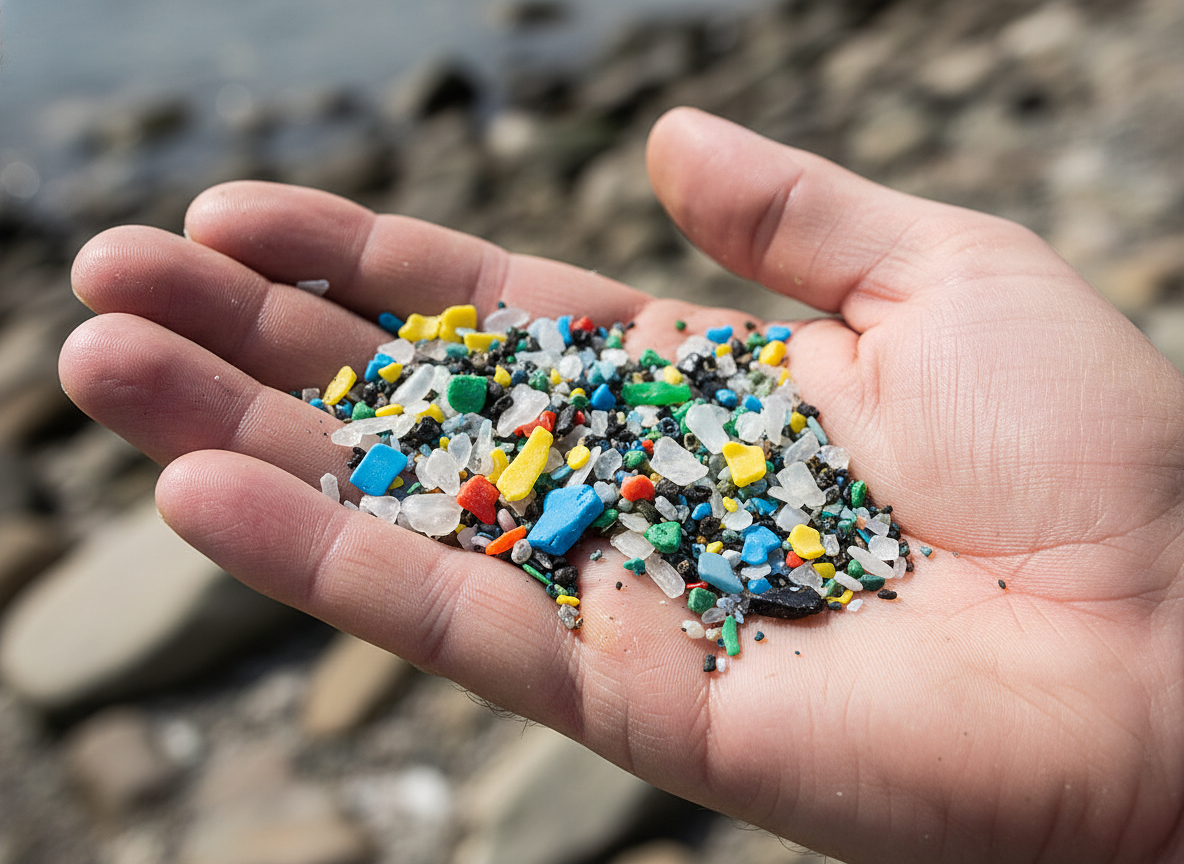
Here is where a lot of buyers get caught.
There is an internationally recognized test standard, ASTM D6954, that measures whether a plastic with oxidation additives completes its full journey instead of stalling halfway. It runs in three stages:
- Tier 1, oxidation: confirms the long polymer chains break into much smaller pieces.
- Tier 2, biodegradation: confirms microbes actually eat those pieces, measured by the carbon dioxide they give off.
- Tier 3, ecotoxicity: confirms nothing harmful is left behind.
Read those in order and the trap becomes obvious.
"A material that only ever documents Tier 1 has proven exactly one thing: it breaks into smaller pieces. That is how you make microplastics."
Fragmentation confirmed. Consumption not confirmed. Two additive formulations can use the same chemistry and reach opposite outcomes. One breaks into fragments and quits. The other breaks into fragments that microbes finish off before those fragments ever reach microplastic scale. Same technical language on the brochure. Opposite reality in the soil.
The spec sheet is not the proof

Here is the villain, and it is not a competitor claiming things it shouldn't. It is a gap: the space between a material's designed degradation pathway and a supplier's verified execution of that pathway.
An additive supplier benefits from describing the pathway whether or not an independent lab ever confirmed the full sequence in their specific formulation. The cost of staged testing sits with the supplier. The cost of an unverified result sits with you. So it is tempting to hand over a spec sheet that describes the chemistry and call it evidence. A spec sheet describes intent. Test data describes what happened.
And the stakes are climbing. Regulators in many markets are shifting from self-declared claims toward third-party verified data. If your packaging generates microplastics while carrying a responsible-sounding claim, your brand owns that liability the moment a journalist or a regulator runs the test you didn't.
What actual proof looks like
BioBottles® and BioCaps®, bottles and caps built to prevent microplastic formation, use PlasticIQ® technology, a Prodegradant BioPolymer Catalyst blended into HDPE and PP respectively. It triggers controlled oxidation when exposed to oxygen, heat, and UV, and enables the degradation pathway to continue until the material is small enough for microbes to digest.
The difference is the paperwork underneath it. BioBottles® and BioCaps® carry complete Tier 1 through Tier 3 data under ASTM D6954, independently verified by labs including Jordi Labs, showing the breakdown proceeds through fragmentation and into biological consumption before fragments ever reach microplastic scale.
That is what lets us say it plainly: No microplastics. Please recycle.
The one question that settles it
The question was never whether the technology can work. It can, and the staged data shows it. The real question is whether a supplier proved that its version did, or just named it.
So before your next sourcing decision, ask for the Tier 3 report by name. Not the brochure. Not the category term. The report. If the answer comes back as a spec sheet, you have your answer.
Learn how BioBottles® and BioCaps® with PlasticIQ® technology work, and request Green Frog Packaging's full test documentation, at gogreenfrog.com.