Does PlasticIQ technology really prevent microplastic formation?
Here is the packaging industry's dirtiest open secret: most products marketed as "degradable" do not eliminate microplastics. They manufacture them. Faster than plain plastic does, by design.
You would think a package that promises to break apart is doing you a favor. It is not. The mechanism that makes cheap degradable additives "work" is fragmentation. The plastic shatters into smaller and smaller pieces until you cannot see them anymore, and then the marketing stops talking. Out of sight, problem solved. Except the pieces are still there. They are just too small for anyone to photograph for a sustainability report.
So when someone asks whether PlasticIQ® technology really prevents microplastic formation, the honest answer starts with a harder question: prevents it compared to *what*? Because half the market is measuring the wrong thing.
Nobody got paid to ask what the plastic becomes
For two decades, additive suppliers sold fragmentation chemistry and brands bought the green story that came with it. The suppliers profited from a cheap fix. The brands profited from a label. Neither party was ever paid to answer the only question that matters, which is what the fragments actually turn into once they leave the bottle.
The conversation quietly shifted from "what does this material become?" to "how fast does it disappear?" And disappearance got sold as proof of safety. It was not. The fragments did not go away. They got smaller, and smaller counts as invisible, and invisible counts as gone. Buyers who trusted the label were handed a problem dressed as a solution.
The one-year rule that a tree cannot pass
Here is where it gets genuinely absurd. In the U.S., the FTC's Green Guides (§260.8) set the bar for a degradation claim at complete decomposition within one year.
Under that rule, an oak tree is not biodegradable. Neither is bone. Neither is driftwood.
A fallen log takes a decade or more to return to soil, so by the FTC's definition, a forest floor fails the test. Let that sit.
A one-year ceiling that nothing shelf-stable can clear is not a scientific finding. It is a standard that protects the recycling industry's status quo. The recycling lobby has every incentive to keep durable, genuinely degrading plastics off the shelf, and writing the definition so tightly that nothing real can meet it is a very efficient way to do that. Follow the money and the "science" starts to look like a moat.
"The label describes the marketing. It does not describe the chemistry. Those are two different documents, and only one of them is testable."
What "prevention" actually looks like when it is real
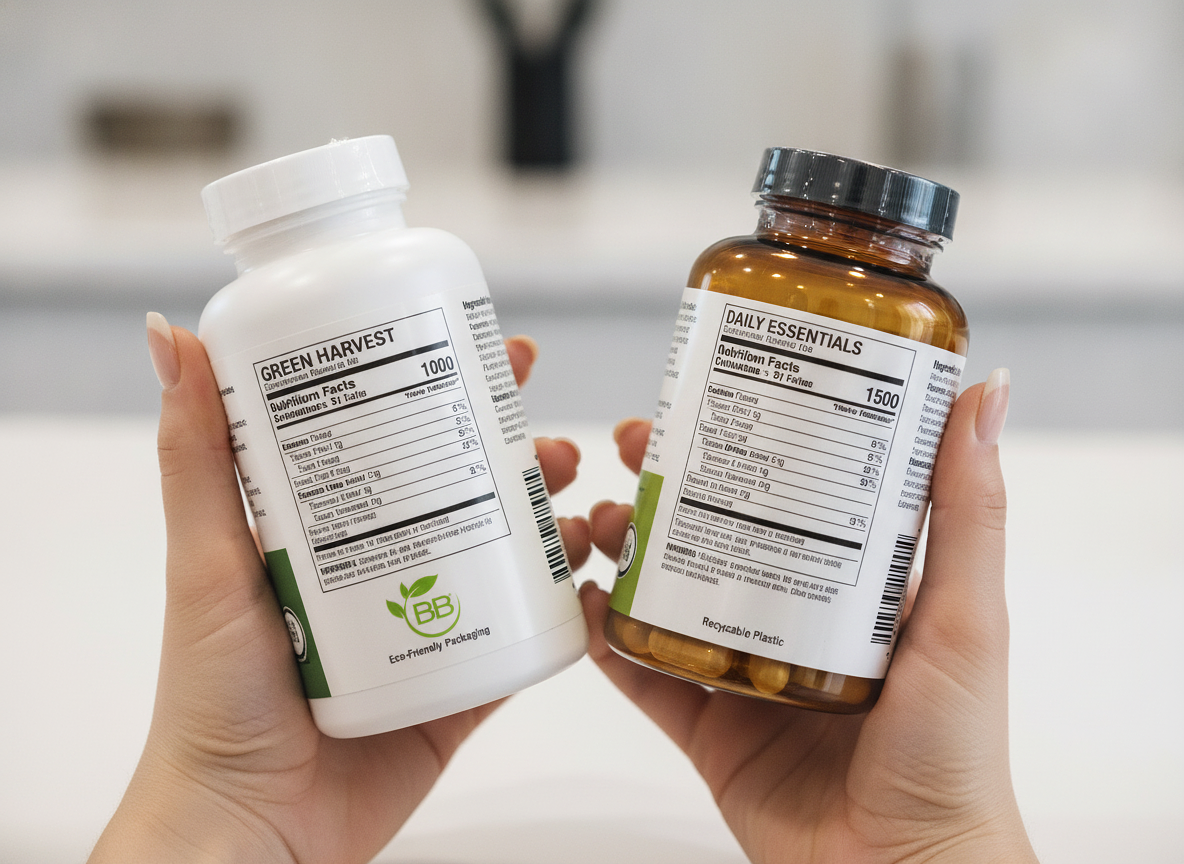
So where does that leave BioBottles®, which are HDPE bottles designed to prevent microplastic formation instead of fragmenting into permanent dust? They incorporate PlasticIQ® technology, a catalyst blended into the plastic at roughly one percent. BioBottles® and BioCaps® both incorporate PlasticIQ® technology, giving brands across bottle and cap formats the same microplastic-prevention performance.
Here is the difference that actually answers your question. Fragment-only additives oxidize the plastic and quit. The pieces just get smaller forever. With PlasticIQ® technology, the catalyst ensures polymer chains break down to sizes microorganisms can process, preventing persistent microplastic fragments. No persistent fragments left behind. That last step is the entire ballgame, and it is the step the cheap stuff never reaches.
This is oxo-biodegradable chemistry done correctly: controlled oxidation followed by genuine microbial assimilation. Not fragmentation that stops halfway and calls it a day.
"How do I know PlasticIQ® actually finishes the job?"
You are right to ask. A supplier can claim anything. BioBottles® and BioCaps® are tested using ASTM D6954, a staged three-part protocol that confirms whether a material breaks into fragments or breaks down all the way:
- Tier 1, oxidation: confirms the chains actually start breaking down.
- Tier 2, biodegradation: confirms microbes consume the material and release carbon dioxide, meaning it becomes microbe food, not permanent dust.
- Tier 3, ecotoxicity: confirms no harmful residue is left behind.
Fragment-only chemistry passes Tier 1 and dies at Tier 2. That is the tell. PlasticIQ® technology is verified across all three tiers, with third-party validation from Jordi Labs. Tier 2 is exactly where "it disappeared from the shelf" gets separated from "it was fully consumed."
Why should you care as the buyer? Because if you specify the wrong degradable packaging, you are the one holding the bag when a retail partner or regulator asks what your product actually leaves behind. "The additive supplier told us it degrades" is not an answer. Staged test data is.
The fragments never left. They just got too small to see. The point of BioBottles® with PlasticIQ® technology is that there are no persistent fragments to hide in the first place.
No microplastics. Please recycle.