How Much Plastic Is In The Ocean & Can BioBottles Help?
There are more microplastic particles in the ocean than visible stars. Here's why your "eco" bottles never broke down, and what actually does.
There are more microplastic particles floating in the ocean right now than there are stars you can see from Earth. Trillions of them. And the plastic you tossed last Tuesday, the bottle you rinsed and dropped in the bin like a responsible adult, is already cracking apart into the next batch.
You did everything right. The plastic still won.
Here is the part nobody told you. The "eco" plastic you have been buying for years was almost never built to break down. The system was never designed to make it break down. It was designed to make you feel like it would.
The word that means nothing
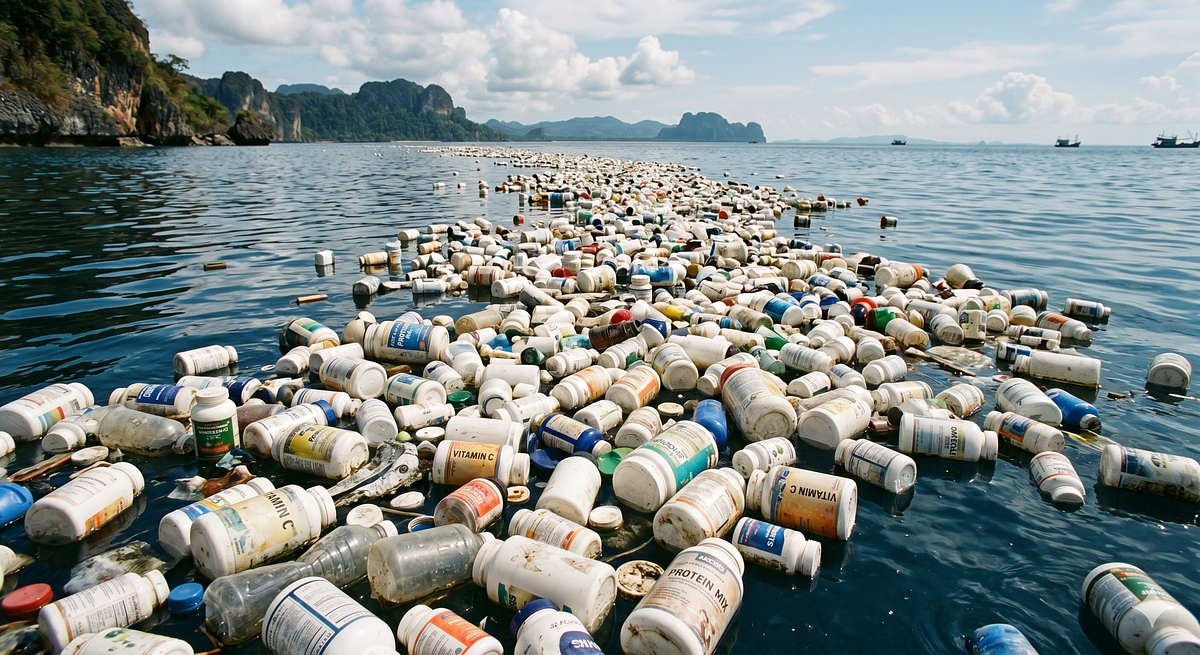
Walk down any grocery aisle and you will find bottles labeled "biodegradable." Sounds like the bottle goes away. It does not.
Most of those bottles need a special industrial composting facility to break down at all, and fewer than 1 in 4 American households can access one. So the label is technically true and practically meaningless. The bottle gets thrown out, lands in a landfill, sits there for centuries, and the company points at the result and shrugs.
Conventional plastic takes 450 years to disappear. Every bottle you have "responsibly" discarded in your lifetime is still out there, getting smaller, never gone, just becoming the dust your kid drinks.
A rule so strict a tree fails it
Now meet the rule that made all of this possible.
The industry helped write a definition of "biodegradable" so strict that a fallen oak tree fails it. Bone fails it. A piece of driftwood fails it. The entire forest floor fails it.
Who benefits from a bar so high that nature itself cannot clear it? Follow the money. A ceiling that no shelf-stable product can meet is the standard that protects the recycling industry's status quo. Write the definition so nothing real can satisfy it, and the competition never arrives. That is not an accident. That is the point.
Why the cheap stuff never changed

Conventional plastic is cheap to make and expensive to replace. So instead of funding a real alternative, the industry funded the feeling of one. Recyclable messaging. Green arrows. Reassuring labels.
Meanwhile, the actual recycling rate for plastic bottles sits below 30%. The other 70% goes to a landfill or breaks loose into the world. They sold you the comfort and kept the volume, because volume is where the money is.
Where the bottle goes matters more than the bin
This is not an accounting problem. Microplastics have been found in human blood, in breast milk, and in the placentas of unborn babies. A 2024 study in the New England Journal of Medicine found microplastics in human arterial plaque, linked to a significantly higher risk of heart attack and stroke.
What fragments in the ocean does not stay in the ocean. It comes home. It ends up in the water your kid drinks.
And now the shrug: plastic companies labeled bottles "biodegradable" knowing most would never reach the specialized facility required to actually degrade, then pointed at the landfill result as proof that nothing better exists. They moved the finish line into a building you cannot enter, then called it a fair race. The reader was never meant to win. The game was never meant to end.
A bottle built to actually break down
So what do you do when the label is a trick and the rule is rigged?
You change the bottle itself.
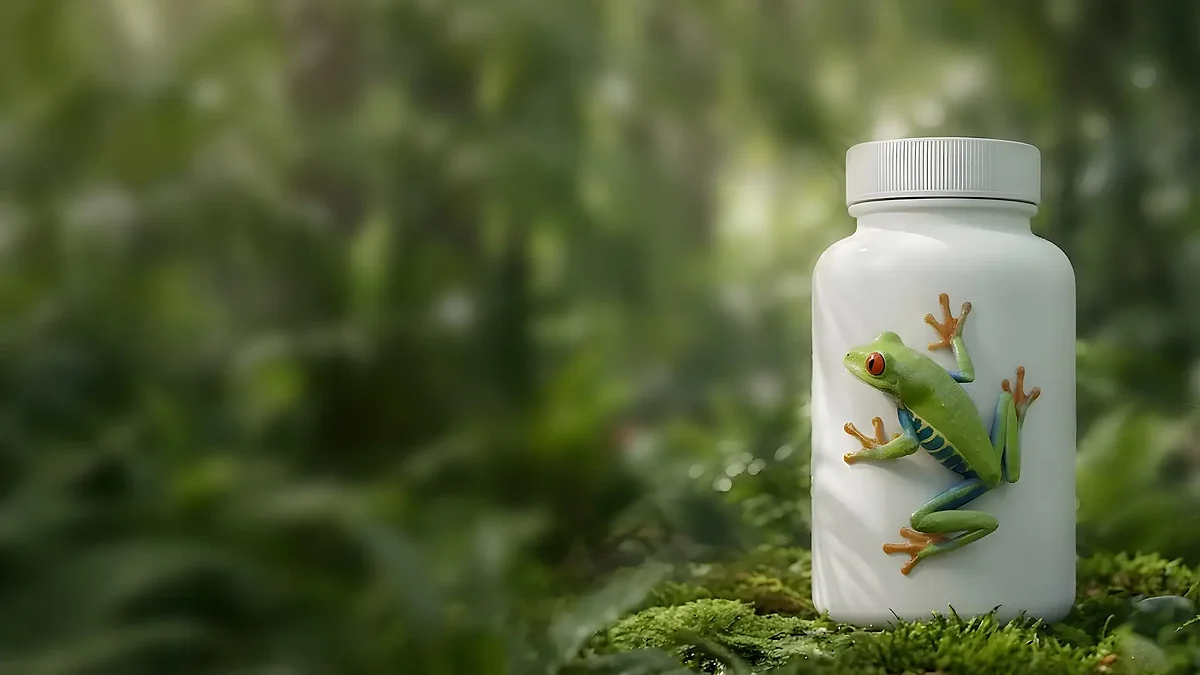
A company called Green Frog Packaging makes a bottle, they call it a BioBottle®, and the difference is not in the label. It is in the plastic itself.
Conventional plastic takes 450 years to disappear. BioBottles® break down in roughly five, and leave behind biomass, water, and CO₂ instead of the dust your kid drinks. No industrial composting facility required. The breakdown is built into the material. And BioBottles® are fully recyclable through standard plastic streams where those programs exist, and shelf-stable for the life of your product.
Not 450 years. Not a cloud of plastic fragments. The stuff bacteria actually eat.
The point
The ocean is already holding more plastic specks than the night sky holds stars. It does not need another green label promising something the system was built to prevent.
It needs a bottle that actually disappears.
That bottle exists. The label was never the answer. The bottle is.
See what a bottle built to disappear actually looks like: gogreenfrog.com.