What Is Biodegradable Plastic?
That label promising plastic will break down? It is a self-made claim no government verifies. Here is what the word actually tells you.
Flip over a bottle that promises it will break down, and you feel a small flush of virtue. You paid a little more. You did the right thing. You bought the version that goes back to the earth instead of sitting in a landfill for your grandchildren to inherit.
Except it does not mean that.
Most plastics sold with that promise only break down inside an industrial composting facility, a giant heated room running at around 140°F with controlled moisture and microbes. Drop that same bottle in your backyard, or watch it slip off a boat into the sea, and it behaves like any other piece of plastic. It persists. For decades. The label described a fate that almost no consumer can actually deliver.
The word means whatever the seller needs it to mean.
Here is the part that should make you sit up. On plastic packaging, there is no single government-enforced definition of that breakdown claim that a shopper can verify at the shelf. A company can run a test, or point to a test someone else ran, and print the word. No inspector checks it before it reaches your cart.
So the word got quietly redefined. It used to suggest something hopeful: that the material would return to nature on its own. Now, in practice, it often means "will break apart under industrial conditions you will never have access to." When anyone complains, the manufacturer points at the fine print. *We never said it would break down in your garden.* True. They also never made sure you understood that.
You are not buying an outcome. You are buying a feeling of responsibility, sold back to you at a premium.
The incentive only points one direction
Why does this keep happening? Because the math is beautiful for the seller and terrible for you.
The green-sounding label commands a higher shelf price. And at the point of sale, there is no body routinely prosecuting the claim, so the downside of stretching it is roughly zero. Higher margin, no enforcement. That is not a loophole anyone forgot to close. That is the whole business model.
Fragmenting is not the same as vanishing

Then there is the trick that got banned. Some plastics were sold as friendly to the environment because they fragment faster, crumbling into smaller and smaller pieces. Sounds like progress. It is the opposite.
"Breaking into tiny pieces is not breaking down. It is just making microplastics faster."
The European Union banned oxo-biodegradable plastic in 2021 for exactly this reason: fragmentation creates persistent microplastic dust, not safe assimilation. And those fragments are not harmless. Microplastics have been found inside the arterial plaque of heart attack patients, and a 2024 study in the New England Journal of Medicine linked that exposure to a significantly higher risk of heart attack, stroke, or death. In other words, the plastic that was supposed to disappear may be ending up in the one place you most need clean.
A 2026 study from Fudan University and Duke University, published in Nature Climate Change, found that microplastics floating on the ocean surface trap solar heat in ways that contribute roughly 16% as much warming as soot in affected regions. The plastic did not go away. It just became invisible enough to stop you worrying about it.
A paper bag can beat a plastic one labeled to break down
Picture two bags in the same landfill. One is plain paper, no green claims, no premium. A plain paper bag in a landfill is gone in roughly two to five years. The plastic bag next to it, stamped with a breakdown promise, can still be there thirty years later.
You cannot tell any of this from the shelf. You cannot see which standard, if any, was used. You are trusting a claim the seller made about themselves, graded by themselves.
What a verifiable claim actually looks like
The fix is not a better adjective. It is an independently testable condition and a named pathway. That means a third party, not the manufacturer, runs the tests. It means the conditions required for breakdown are stated plainly, not buried in fine print. And it means you can check whether the product meets a published standard before you buy it. Brands including Innocent Drinks and Pret A Manger have already moved toward certified compostable packaging on exactly this logic: the claim only counts if someone other than the seller can verify it.
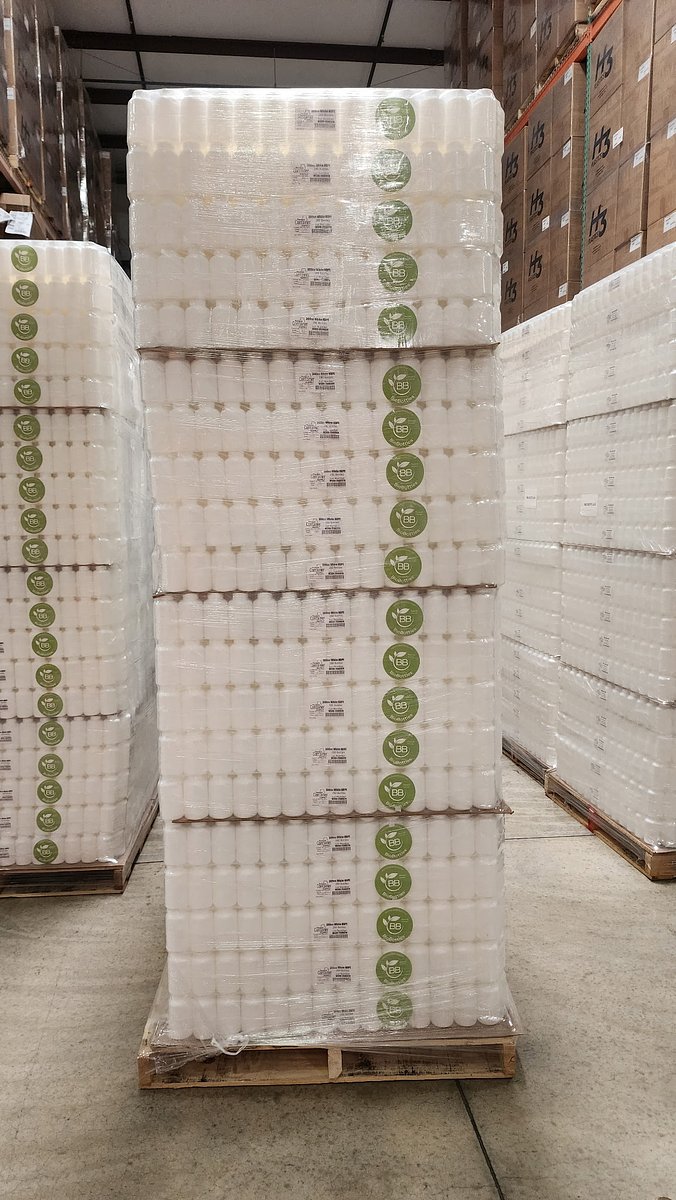
That is also the standard BioBottles® is held to. The bottles and caps are engineered so that if packaging escapes the waste system entirely, it breaks down into material that microbes can actually eat, not into fragments that linger. An independent lab confirmed that no harmful residue is left behind. And the bottles still go in your recycling bin.
In plain terms: the technology triggers a controlled breakdown when the plastic is exposed to oxygen, heat, and UV light, the conditions that exist in the real world, not just in a controlled industrial facility. The breakdown produces no microplastics. That claim was verified externally, not self-declared on a label.
The simple claim BioBottles® stands behind: No microplastics. Please recycle.
So flip the bottle over again. If all the label offers is a warm feeling and no condition you can check, it is telling you exactly one thing: someone wanted you to feel better about buying it.