Switch To BioBottles Campaign
The bottle you tossed as "recyclable" will outlive your great-great-grandkids. Here's the fix, and how to ask your favorite brand to switch.
The water bottle you bought this week is not going anywhere. Not in your lifetime. Not in your kids' lifetime. A plastic bottle you drank from on a Tuesday will still exist, in some broken-down form, when your great-great-grandchildren are walking around. That is the material science. The bottle does not care how responsibly you sorted it.
So you do the responsible thing. You rinse it. You toss it in the blue bin. You feel a little better.
Here is the part nobody printed on the label.
The word "recyclable" was quietly emptied out
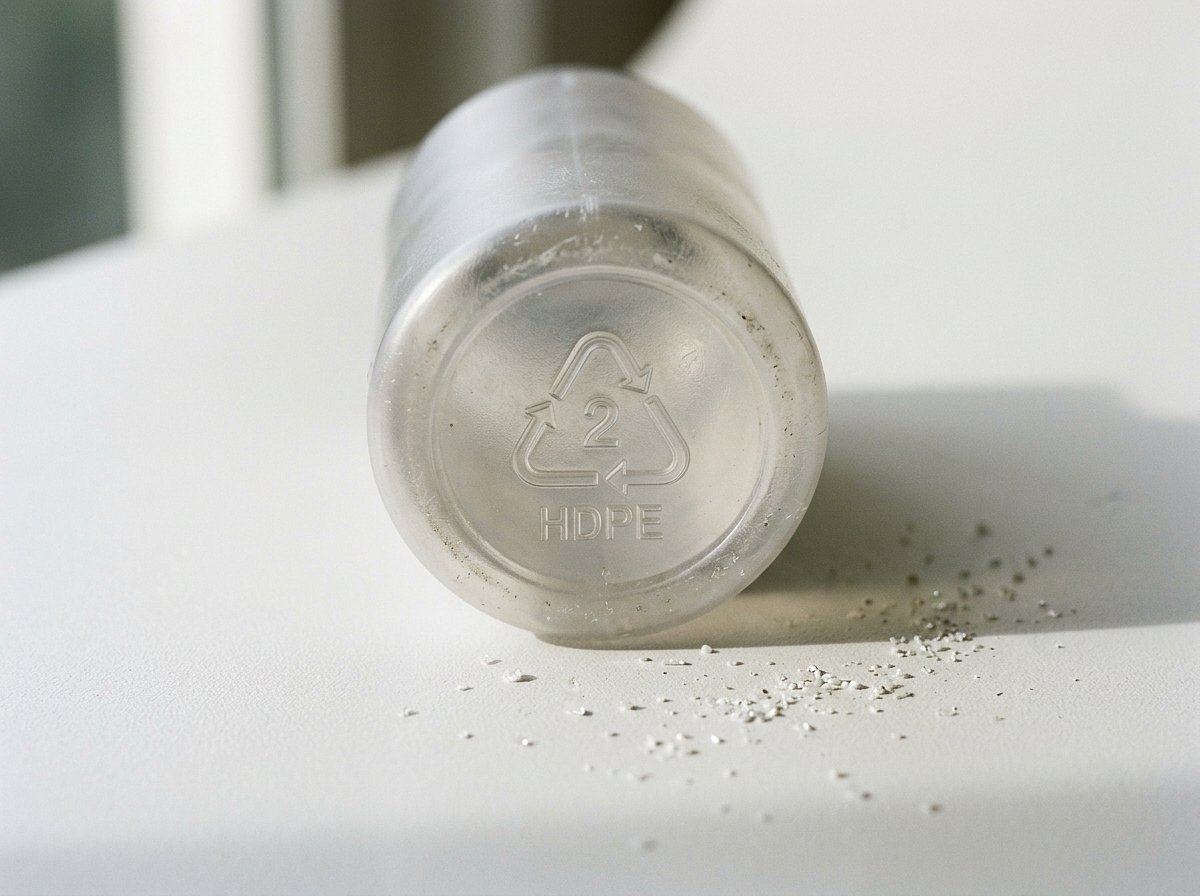
Around 9% of all the plastic ever made has actually been recycled. That is the global number. The rest got landfilled, burned, or left to fragment loose in the world, roughly half buried, a fifth incinerated, and the last chunk simply mismanaged.
Nine percent. Yet almost every bottle wears the little chasing-arrows symbol like a merit badge.
The symbol is allowed to sit on a bottle even when no facility anywhere near you will take it. It does not promise the bottle gets recycled. It does not even promise it can be, in your town. It just sits there, looking responsible, while the odds run heavily against it.
Conventional plastic is cheap to make and expensive to redesign. So the industry poured its money into better labels, not better bottles. Same bottle. Nicer story. The shopper absorbs the guilt; the plastic stays in the ground.
The rule that says a tree isn't biodegradable
You would think there is at least a real standard for the word "biodegradable." There is. It is stricter than you would ever guess, and stricter in a way that should make you laugh, then squint.
In the United States, the FTC's Green Guides set the bar at complete biodegradation within one year. Anything slower does not qualify.
Under that one-year rule, an oak tree is not biodegradable. Neither is bone. Neither is a fallen log in a forest.
A standard so strict that a forest floor fails it was not written by scientists. It was written by an industry that needed a fence.
A one-year ceiling that no shelf-stable product can realistically clear is not an accident of science. It is a very useful fence. The recycling industry and its lobby have every reason to keep durable, genuinely-breaking-down plastics off the shelf, and writing the definition so tight that nothing real can meet it is a tidy way to do exactly that. Follow the money and the fence starts to look less like caution and more like a favor to whoever benefits from you staying at the blue bin, feeling responsible.
Why this is now inside you
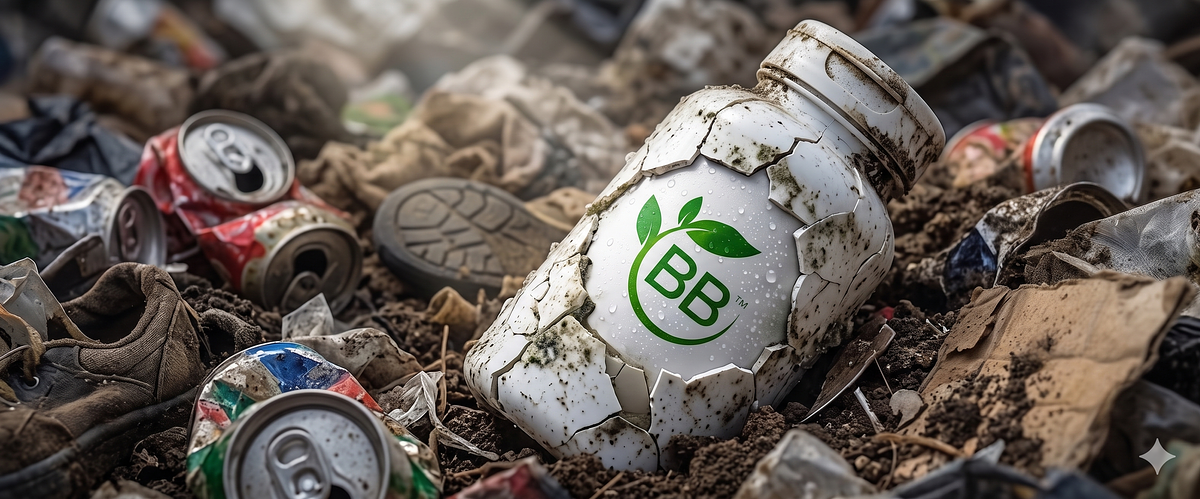
All that plastic that never got recycled does not vanish. It crumbles. It becomes microplastics, and microplastics are turning up in tap water, in sea salt, in human blood, and in breast milk.
You are not dodging this by recycling carefully. Sorting your bins does not pull microplastics back out of the ocean. At best you are slowing the drip. The bottle you did everything right with is still cracking into pieces small enough to circulate through a body. Every conventional plastic bottle you have ever bought is still out there.
A bottle designed to end differently
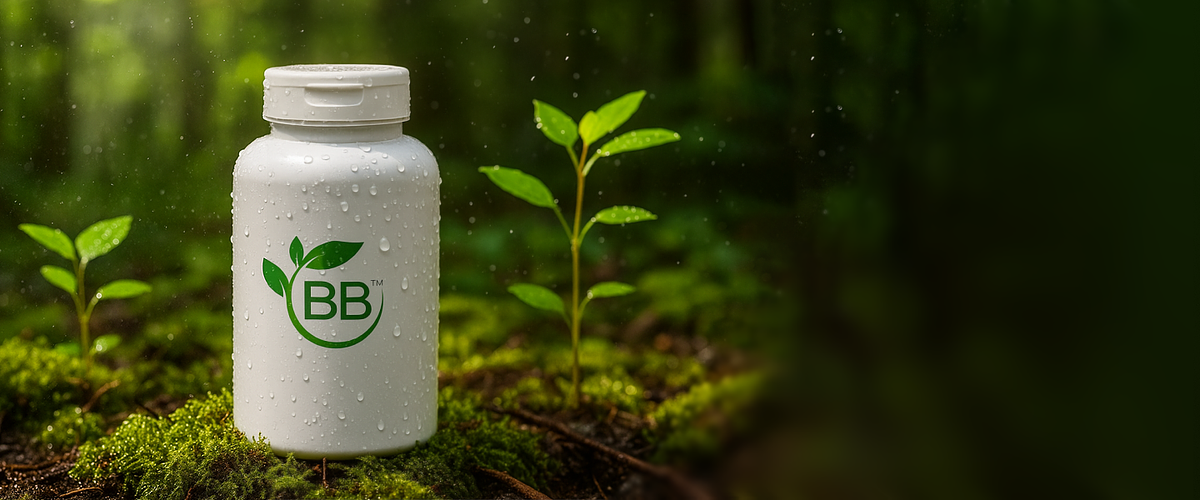
Green Frog Packaging makes a bottle called BioBottles®, and the difference is built into the material, not the label.
Conventional plastic takes roughly 400 years to fragment; BioBottles® break down approximately 90× faster, converting into biomass, water, and CO₂ instead of microplastics.
Here is the honest version of what that means:
- Where conventional plastic fragments into persistent microplastics, BioBottles® convert into a waxy substance that bacteria consume into biomass, water, and CO₂.
- Fully recyclable. Shelf-stable for the life of your product.
- The difference is in the bottle itself, not on the label.
Green Frog Packaging runs a campaign called Switch to BioBottles®, and it is aimed at you, not at some boardroom. Real supplement shoppers pick a brand they already buy, write a short note, and ask that brand to move from ordinary plastic to BioBottles®. Brands change when their own customers ask. Signing takes about a minute, your contact info is never published and never handed to the brand, and your message goes up with just your first name and last initial.
See which brands have already switched and add your voice: Switch to BioBottles®.
"You didn't create this problem. But you're the one drinking it."